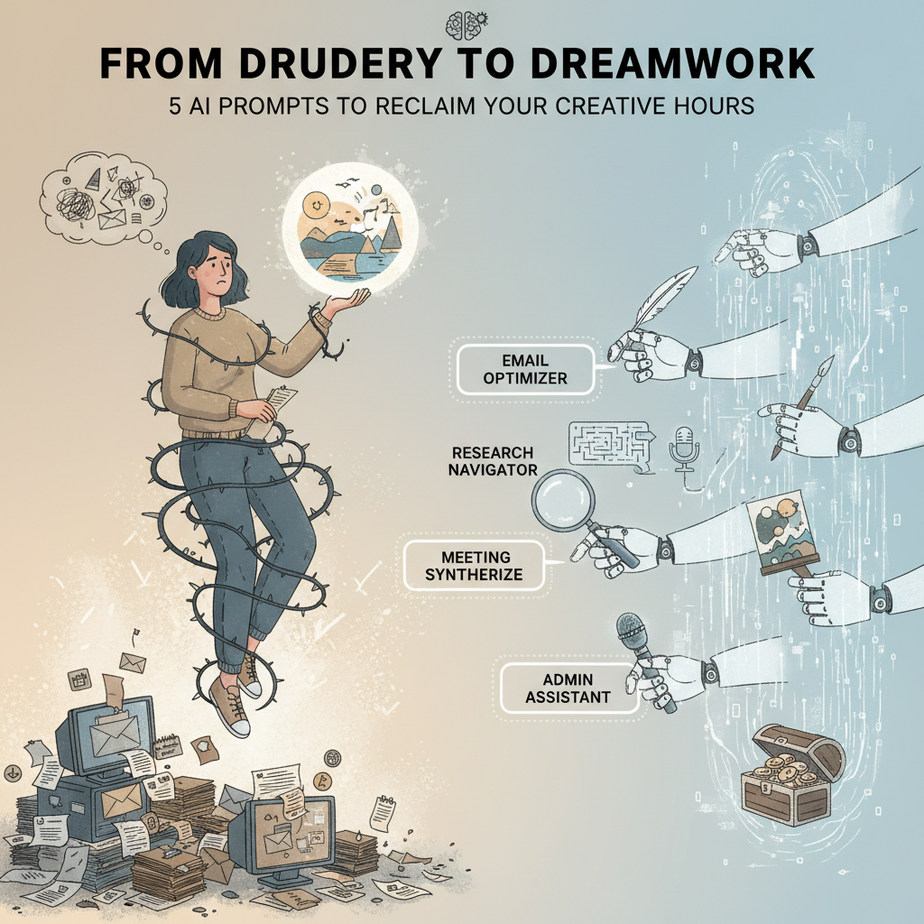
Hook: The Inbox That Ate Your Soul
Let me tell you a story about a freelancer I once knew. His name was Alex. Every morning, Alex would open Gmail and perform a sacred ritual. He’d see 50 new emails. He’d manually label 15 as “Urgent,” archive 20 newsletters, and leave 5 in the inbox to be “handled later” (which, of course, never happened).
Three hours later, his brain was fried, his focus was shattered, and he hadn’t done a single dollar of billable work. Alex wasn’t a business owner; he was an unpaid intern for his own inbox.
Sound familiar? If your email feels like a never-ending game of digital whack-a-mole, this lesson is your intervention.
Why This Matters
Time is the one resource you can’t automate or buy back. Every minute you spend deciding “Is this a priority?” is a minute stolen from actual productive work. An automated inbox doesn’t just save time—it preserves your mental clarity for decisions that actually matter.
What this replaces: The human intern who’s paid to open emails and sort them. The anxiety of missing an urgent request because it’s buried under 100 newsletters. The end-of-day panic when you realize you forgot to reply to a client.
What This Tool / Workflow Actually Is
We are building a simple, rule-based email triage system using Google Apps Script. This is NOT a fancy AI that writes emails for you. This is a set of clear, deterministic rules that automatically:
- Flags emails from specific senders as Priority.
- Archives marketing newsletters automatically.
- Labels emails with your project codes.
- Keeps your main inbox clean for truly important, unclassified emails.
Think of it as a robotic sorting hat for your inbox. It uses simple logic, not artificial intelligence.
Prerequisites
You need:
- A Gmail account (any free @gmail.com address).
- Access to a browser. That’s it. No coding experience required.
- 15 minutes of uninterrupted time.
You do NOT need:
- To be a programmer. We will copy and paste.
- Paid software. Gmail and Google Apps Script are free.
- A complex setup. We’re building a simple bot, not a skyscraper.
If you can fill out a web form, you can do this. Trust me.
Step-by-Step Tutorial
Step 1: Open the Script Editor
Go to script.google.com. Click “New Project.” You’ll see a screen with a code editor. This is where we’ll write our email robot’s instructions.
Step 2: Name Your Project & Understand the Canvas
At the top, where it says “Untitled project,” click and name it “Email Triage Bot.” We’ll use two main areas: the code editor (where you type) and the menu (on the left) where we’ll create triggers (rules that run automatically).
Step 3: Write the Core Sorting Function
Copy and paste this entire block into the code editor. This function will sort emails every 15 minutes (or however often you set it).
function sortInbox() {
  // Get the Gmail inbox
  var threads = GmailApp.search('in:inbox newer_than:1d');

  // Loop through each email thread (last 24 hours)
  for (var i = 0; i < threads.length; i++) {
    var thread = threads[i];
    var messages = thread.getMessages();
    var firstMessage = messages[0];
    var from = firstMessage.getFrom();
    var subject = firstMessage.getSubject();
    var body = firstMessage.getPlainBody();

    // RULE 1: Flag as Urgent
    if (from.includes('client@example.com') || from.includes('boss@company.com')) {
      thread.addLabel(GmailApp.getUserLabelByName('Urgent'));
      thread.moveToInbox();
      continue; // Skip to next thread
    }

    // RULE 2: Auto-archive Newsletters
    if (subject.toLowerCase().includes('newsletter') ||
        from.includes('noreply@')) {
      thread.moveToArchive();
      continue;
    }

    // RULE 3: Project Labeling (customize this!)
    if (subject.includes('[Project-Alpha]') ||
        body.includes('#project-alpha')) {
      thread.addLabel(GmailApp.getUserLabelByName('Project Alpha'));
    }

    // RULE 4: Spam/Trash (words that often mean junk)
    if (subject.toLowerCase().includes('win a free') ||
        subject.toLowerCase().includes('urgent action')) {
      thread.moveToTrash();
    }
  }
}
Step 4: Save & Set Up the Automation Trigger
1. Click the floppy disk icon to save.
2. On the left sidebar, click the clock icon (Triggers).
3. Click “+ Add Trigger” in the bottom right.
4. Select the function: sortInbox
5. Select time: “Time-driven” > “Minute timer” > “Every 15 minutes”
6. Select failure notification: “Notify me immediately” (good for debugging)
7. Click “Save”. Google will ask for permission to access your Gmail. Click “Allow”. This is safe; it only controls your own account.
Step 5: Test It Manually
Before letting the robot run, test it.
- Go back to your code editor.
- Click the play icon (►) above the code. A small pop-up will appear. Click “Review Permissions,” choose your account, and click “Advanced” > “Go to Email Triage Bot (unsafe)” > “Allow.”
- Check your Gmail. You should see labels appearing or emails being archived. If you don’t, check the “Execution Log” (View > Logs) for errors.
Complete Automation Example
Meet Sarah, a real estate agent. Her inbox is a disaster: client inquiries, MLS listings, marketing emails, and vendor spam all jumbled together. She misses important buyer emails because they drown in a sea of property alerts.
Her Automated Workflow:
- Rule 1: Any email from her agency domain (
@prestigerealtors.com) gets labeled “Agency” and stays in the inbox. - Rule 2: Emails with “Open House” in the subject from MLS feeds get labeled “Listings” and archived. She checks this label folder twice a day.
- Rule 3: Any email from a known lead source (e.g., Zillow) gets the label “New Lead” and a star is added.
- Rule 4: Anything from a domain like “newsletter@” gets archived automatically.
Result? Sarah’s main inbox has 5-10 emails a day, all important. Her “New Lead” folder is prioritized. She spends her time closing deals, not sorting filters.
Real Business Use Cases
- Freelance Web Developer: Project codes in subject lines automatically move client emails to dedicated folders. Invoice reminders from accounting software get a special label. Less searching, more coding.
- E-commerce Store Owner: “Order #” emails from Shopify get sent to a dedicated “Orders” label. Complaints (words like “broken,” “refund”) get flagged urgent. Marketing blasts are archived after reading once.
- Non-Profit Executive: Donation receipts are auto-categorized. Emails from board members are prioritized. Volunteer inquiries are labeled for review. The volume is managed without a full-time admin.
- Student Researcher: Paper submission alerts, professor emails, and journal alerts are separated. Automated emails from services (like your library) are archived. Focus stays on core research.
- Small Business Owner: Invoices, project updates, and vendor emails are separated. Spam from bulk senders (like web hosting newsletters) is auto-archived. The owner gets a clean dashboard of actionable items.
Common Mistakes & Gotchas
Mistake 1: Too Many Rules. Start with 2-3 rules. Adding 50 will make debugging a nightmare. Your inbox isn’t a software architecture; it’s a processing plant. Keep the line moving.
Mistake 2: No Testing. Always run your function manually first. A bad rule can accidentally archive years of important emails. Start with one rule, test it, then add another.
Mistake 3: Ignoring the “Unclassified” Inbox. The goal isn’t to have ZERO emails in your inbox. The goal is to have ONLY the emails that require your unique human judgment. Some emails must stay there.
Scalability Warning: This Google Apps Script has a daily execution time limit (Google’s quota). For hundreds of emails per day, you might hit the limit. For now, it’s perfect for personal or small business inboxes.
How This Fits Into a Bigger Automation System
This email sorter is the first layer of your automation infrastructure. It feeds into larger systems:
- CRM Integration: Your “New Lead” labels can trigger a Zapier/Make.com scenario to create a contact in your CRM (like HubSpot or Salesforce).
- Multi-Agent Workflow: An urgent label could send a Slack notification to your sales team. An invoice email could auto-categorize in your accounting software.
- RAG System: Archived project emails can be fed into a vector database, so you can later ask an AI chatbot, “What was the deadline for the Alpha project?”
This bot is your diligent intern who organizes the filing cabinets. Tomorrow, we’ll teach that intern how to draft replies to the most common questions. Stick around.
What to Learn Next
You’ve just automated your first piece of cognitive labor. Feel that? That’s the beginning of freedom.
In the next lesson, we’ll take your organized inbox and teach your robot to write back. Using Gmail’s Canned Responses and some simple logic, you’ll automate replies to 80% of your repetitive questions—turning your inbox from a task list into a processed log.
Your next assignment: Implement one rule from this lesson. Just one. Make it run. Then come back for Lesson 3.
“,
“seo_tags”: “email automation, google apps script, gmail automation, inbox zero, business automation, workflow automation, productivity hacks, beginner automation”,
“suggested_category”: “AI Automation Courses